How to Order Branded Uniforms for a Large Team (Without the Headaches)
Getting branded uniforms right across a large team is one of those tasks that looks straightforward until you’re actually in the middle of it. Suddenly you’re chasing size lists from three different departments, trying to work out whether the logo needs to be embroidered or screen printed, and wondering why the supplier’s sample looks nothing like what was on their website.
If you manage procurement or office operations for a mid-to-large Australian business, this guide is written for you. Not for someone ordering five polo shirts with a name on them — this is about doing a proper uniform rollout properly. The first time, if possible.
We’ve worked with procurement teams across construction, hospitality, financial services, retail, healthcare and government. The mistakes we see are almost always the same ones. So here’s how to avoid them.
Step 1: Get Your Brief Sorted Before You Talk to Anyone
The single biggest cause of delays, reprints and budget blowouts in uniform orders is going to a supplier before you actually know what you need. It sounds obvious. It happens constantly.
Before you make a single enquiry, you should be able to answer these questions:
- How many garments are needed — and across how many staff members?
- What roles are being uniformed, and do different roles need different garments?
- Are there any safety or compliance requirements (hi-vis, flame-retardant, food-safe, etc.)?
- Where will the uniforms be worn — office, outdoors, customer-facing, physical labour?
- What is the brand logo situation? Do you have print-ready artwork, or does it need to be recreated?
- What’s the timeline? Is there a hard deadline (event, new site opening, staff onboarding date)?
- What’s the budget, and is it per-head or total?
You don’t need to have all the answers locked in — a good supplier will help you work through the details. But having a rough idea of scope, timing and budget means the conversation starts in the right place, not three meetings later.
Step 2: Collect Sizes Early — And Build in a Buffer
Size collection is where uniform projects go to die. The bigger the team, the harder it gets. People ignore the email. The new starters haven’t started yet. Someone goes on leave. The sizes come back inconsistent because half your team measured themselves and half didn’t.
A few things that actually help:
- Send a size request with a clear deadline and a reminder. Two reminders if needed. Non-responses default to a medium — make that clear upfront and watch how quickly people respond.
- Use your supplier’s size guide rather than generic sizing. Different garment brands fit differently. A size 14 in one polo is a size 16 in another.
- Order slightly more than you need for new starters, replacements and the staff member who puts in a size small but clearly needs a large. A small buffer stock saves a lot of hassle.
- For roles with high staff turnover, consider ordering in a way that allows reorders of common sizes rather than doing everything as a single large run.
If you’re ordering for a team of 50 or more, it’s worth asking your supplier whether they can hold stock on your behalf for repeat orders. Some can, some can’t — but it’s a question worth asking.
Step 3: Sort Out Your Artwork Before It Becomes a Problem
This is the one thing that causes more delays than anything else. A supplier is ready to go. Garments are in. Production is scheduled. And then someone can’t find the logo file, or the only version they have is a low-res JPEG from the company website.
Here’s what you actually need:
For Embroidery
Embroidery uses a separate file format called a DST or EMB — this is a digitised stitch file. You won’t have this unless you’ve had embroidery done before. A quality supplier will digitise your logo from your artwork, but you need to supply a clean vector file (AI, EPS or high-resolution PDF) for them to work from. If you only have a PNG or JPEG, it can still be done — but the cleaner the source file, the better the result.
For Screen Printing
Screen printing is done by colour — each colour in your logo is a separate screen. Vector files work best here too. If your logo has gradients or photographic elements, talk to your supplier about whether screen printing is the right decoration method, or whether digital transfer or sublimation would give a better result.
For Sublimation
Sublimation can handle full-colour, photo-quality artwork and is great for all-over prints. It only works on polyester or poly-blend garments. If your workwear is cotton, sublimation is off the table.
The key takeaway: dig out your brand assets before you start the ordering process. Vector files, brand colour codes (Pantone or CMYK) and any placement guidelines from your brand manual. If your marketing team has a brand toolkit, now is the time to use it.
Step 4: Choose Garments That Work for the Role, Not Just the Look
It’s tempting to pick garments based on what looks sharp in a product photo. But the uniform that photographs well isn’t always the one your team will still be wearing in good condition after six months of actual work.
Think about the working environment honestly:
- Office and customer-facing roles: presentation matters most. Look for garments that hold their shape, resist pilling and maintain colour after repeated washing. Cotton-rich or cotton-poly blends tend to look professional and feel comfortable for long days.
- Physical and outdoor roles: durability and practicality come first. Ripstop fabrics, reinforced stitching, vented panels and moisture-wicking properties aren’t extras — they’re what makes a uniform actually wearable.
- Food and hospitality: consider stain resistance, ease of washing, and whether staff will need an apron or additional layers.
- Healthcare and allied health: comfort for long shifts, ease of movement and hygiene are the priority. Many practices also need specific colours to distinguish roles.
- Construction and trades: Australian safety standards apply. Hi-vis requirements, reinforced knees on pants, and the right PPE compatibility all need to be factored in.
A good supplier will ask about the role before recommending garments. If a supplier just pushes you toward their highest-margin products without asking what your people actually do all day, that’s a red flag.
Step 5: Understand the Decoration Method That’s Right for Your Brand
The decoration method affects how your brand looks, how long it lasts, and what it costs. Most businesses default to whatever they’ve done before without really thinking about whether it’s the best option. Here’s a quick breakdown:
Embroidery
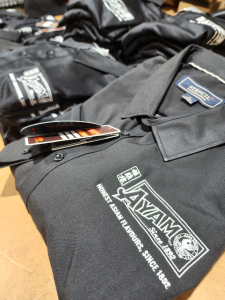
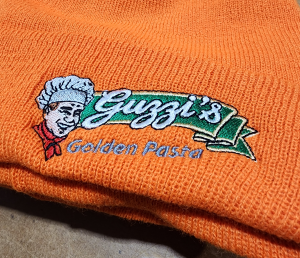
Embroidery is the premium choice for corporate and professional uniforms. It has a quality, tactile feel that you can’t fake. It holds up extremely well to washing, which matters when you’re talking about garments worn five days a week. It works best for logos that aren’t too detailed — fine lines and tiny text don’t embroider well at small sizes. It also adds a small amount of weight and stiffness to the decorated area, which suits chest logos and caps more than lightweight summer shirts.
Screen Printing
Screen printing is cost-effective for large quantities with simple, spot-colour designs. The more you print in one run, the cheaper each piece gets. It’s a solid choice for promotional garments, event shirts and staff t-shirts where you need volume at a reasonable price. Quality screen printing looks great and lasts well — provided the garments are washed correctly.
Sublimation
Sublimation is the right choice when you want full-colour, edge-to-edge or all-over printing — think sports uniforms, high-visibility vests with complex print layouts, or branded jackets. The print is actually embedded into the fabric rather than sitting on top, so it doesn’t crack or peel. The limitation is fabric type: sublimation only works properly on polyester.
Sometimes the best solution is a combination — embroidered chest logo on a screen-printed shirt, for example. A specialist supplier will be able to advise what works for your specific brief.
Step 6: Plan for Lead Times — Especially If You Have a Hard Deadline
Lead times catch people out every time. Someone decides the new uniforms need to be ready for the site opening in three weeks, and then discovers that standard lead times are four to six weeks — and that’s before accounting for artwork approval, size confirmation, and any back-and-forth on samples.
Here’s a realistic guide to what to expect:
- Standard orders (in-stock garments, established artwork): typically 2–4 weeks from artwork approval.
- Custom orders (special garments, complex decoration, large quantities): 4–8 weeks is common. Allow more for orders over 500 pieces.
- Repeat orders with existing artwork: usually faster, often 1–3 weeks depending on production load.
- Rush orders: possible in some cases but expect a premium, and be realistic about what’s achievable without compromising quality.
The practical advice: work backwards from your deadline and add a buffer. If you need uniforms on 1 March, aim to have them in hand by 15 February. Place your order by early January if you want standard lead times to work in your favour.
Also keep in mind that production stops around the Christmas and New Year period. Orders placed in late November that aren’t into production by early December will often slip to late January. If your deadline is January, start the process in October.
Step 7: Request a Sample Before You Commit to the Full Order
For any order of reasonable size, request a pre-production sample before signing off. This isn’t about distrust — it’s just good practice.
A sample lets you confirm:
- The garment colour matches what you expected (monitor colours and print colours are different things)
- The logo size and placement is correct
- The decoration method looks the way you envisioned it
- The fabric quality meets the standard you’re paying for
- The fit and sizing is appropriate for your team
Catching a problem at the sample stage costs nothing — or at most a small sample fee that’s often credited against the full order. Catching it after 200 garments have been decorated is a different matter entirely.
If a supplier is reluctant to provide a sample for a large order, ask why. It’s a reasonable request. For genuinely complex or high-volume orders, visiting a showroom to see actual product examples and decoration quality in person is even better.
Step 8: Work With a Supplier Who Treats It as a Partnership, Not a Transaction
There are a lot of ways to buy uniforms in Australia. You can order from an online-only supplier, buy blanks and take them to a local decorator, or work with a specialist who handles the whole thing end-to-end.
Each has its place. But for a business that needs consistent quality, multiple decoration methods, and a reliable supply of branded garments over time — working with a single specialist supplier who knows your brand, holds your artwork, and has a track record with your type of order is genuinely easier.
What to look for in a supplier:
- They ask the right questions before quoting — about your team, your environment, your deadline and your brand standards.
- They’re transparent about lead times and honest about what’s achievable.
- They have a physical presence — a showroom or premises you can actually visit, where you can see product quality and decoration samples in person.
- They have experience with your industry or order type. A supplier who regularly handles large B2B orders thinks differently to one that focuses on small custom runs.
- They offer proper account management for ongoing orders, not just one-off transactions.
- Their artwork and production process is clear — you know who handles what and when you’ll receive proofs.
The Most Common Mistakes — And How to Avoid Them
After working with procurement teams across dozens of industries, the same issues come up again and again. Here’s a direct list:
Leaving it too late
The number one issue. Quality uniform production takes time. The earlier you start, the more options you have and the less you’ll pay in rush fees.
Going with the cheapest quote
Low prices on uniforms usually mean one or more of these: cheaper fabric that won’t last, lower-quality decoration that fades or peels, slower customer service when something goes wrong, or hidden fees that appear later in the process. A branded uniform is a visible representation of your business. It’s not the place to cut corners.
Not having print-ready artwork
Track down your vector logo files before you start. If they don’t exist — or nobody knows where they are — get them recreated. It’ll cost a few hundred dollars and save you that amount in delays on every order you ever place.
Skipping the sample approval
Always approve a physical or digital proof before production. Always. Without exception.
Ordering exact numbers with no buffer
Staff start. Staff leave. Garments get damaged. Order a small buffer above your exact headcount. It’s almost always cheaper per unit to add a few extras to your initial order than to do a small reorder later.
Not thinking about the full uniform programme
If your team needs polo shirts for summer, jackets for winter and hi-vis for site visits, it’s much more efficient to plan and order the full programme at once. Consistent decoration across all garment types requires using the same artwork files, same placement specs and ideally the same supplier — otherwise your brand consistency will slip.
Common Questions from Procurement Teams
What’s the minimum order quantity for branded uniforms?
This varies by supplier and decoration method. For embroidered garments, most quality suppliers will work from around 10–20 pieces, though per-unit costs come down significantly at higher quantities. Screen printing generally requires higher minimums — often 50+ pieces — to make the setup costs worthwhile. For large corporate orders, there’s rarely a minimum that causes problems.
Can we reorder individual garments as staff join?
Yes, in most cases — especially if your supplier holds your artwork and has supplied the garments before. Small reorders are typically possible, though the cost per unit will be higher than it was on the original bulk order. Discuss this with your supplier upfront if ongoing reordering is likely to be a requirement.
How do we handle sizing for remote staff?
Send a digital size guide with photos and measurements, not just generic size labels. Ask staff to confirm their size in writing. For staff in remote locations, build a small buffer of common sizes into your order so that new starters can be issued garments immediately, with any adjustments handled at the next reorder.
What if we need to update our logo or rebrand?
Plan your rebrand uniform rollout in advance. There’s rarely a need to replace every garment on day one of a rebrand — most businesses phase it in as existing stock is replaced. Talk to your supplier about the new artwork requirements early, and plan a cutover date so you’re not ordering under the old branding right before the rebrand goes live.
We have multiple locations around Australia — can we still work with a single supplier?
Absolutely. A national supplier with a solid logistics operation can ship directly to multiple locations from a single order. This is actually one of the strongest arguments for using a specialist supplier rather than a local decorator for each state — you get consistent quality, consistent branding and centralised account management, regardless of where your teams are based.
Why We Promote You Works for Large Team Uniform Orders
We Promote You is a specialist in branded uniforms, workwear, hi-vis and promotional products for Australian businesses. We work almost exclusively with medium-to-large organisations — the kinds of teams where a procurement manager is coordinating an order, not someone ordering a few shirts for themselves.
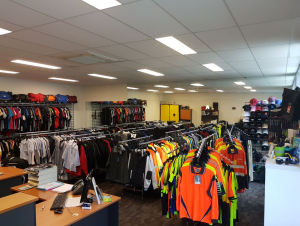
We handle embroidery, screen printing and sublimation in-house and through our production network, which means we’re not brokering your order through multiple third parties. We have two Sydney showrooms where you can see garment and decoration quality in person, check fabric weights and get an honest conversation about what’s right for your specific project.
We ship nationally, we hold client artwork securely for repeat orders, and we’ve been doing this long enough to know where the problems come from — and how to stop them happening.
If you’re planning a uniform rollout — whether it’s 30 people or 3,000 — we’d be glad to have an honest conversation about what’s involved.Ready to get your uniform order sorted?
Talk to the We Promote You team about your requirements. No obligation, no hard sell — just a straight conversation about what you need and how we can help.
Contact us at wepromoteyou.com.au or visit either of our Sydney showrooms