Published by We Promote You | Sydney’s branded uniform and promotional products specialists since 2003
The Silent Conversation Happening Right Now in Your Business
At this very moment, your business is communicating with every customer, client, supplier, and passerby who encounters your team — without your team saying a single word. The communication is silent, constant, and extraordinarily powerful. It is the communication of brand perception: the overall impression people form of your business based on what they see, feel, and intuit from every visual cue your organisation presents.
Among all the visual cues available in a business interaction — the office environment, the vehicle, the marketing material, the website — none is as immediate, as human, or as emotionally resonant as the appearance of the people who represent your business. Your staff are the face of your brand in every real-world interaction. And the most visible, controllable element of their appearance is what they wear.
In this article, we are going to decode the silent conversation that your staff uniform is having with your market right now — what it is saying, what it could be saying, and how Australian businesses with ten or more staff can take control of that conversation through quality branded workwear and custom uniforms. Because whether you have thought deliberately about your uniform strategy or not, your uniform is already speaking. The question is whether you are happy with what it is saying.
Brand perception insight: Customers form lasting impressions about a business’s quality, competence, and trustworthiness within seconds of encountering it. The appearance of staff is one of the most significant inputs to that impression — and it is completely within a business’s control.
The 5 Things Your Uniform Is Saying Right Now
Every uniform — or lack of one — communicates specific messages about your business. Understanding what those messages are is the first step to managing them intentionally. Here are the five key things your staff uniform communicates, for better or worse:
1. Your Standards
The first thing a uniform communicates is the standard to which your business operates. A well-fitted, clean, professionally decorated branded uniform says: this business has standards. It has thought about how it presents itself. It cares about details. A poorly fitting, faded, or inconsistently applied uniform says: this business does not pay close attention to how things look. If it does not pay attention to this, does it pay attention to how its work looks?
In industries where quality and attention to detail are core selling propositions — construction, professional services, healthcare, premium hospitality — the uniform’s communication of standards is directly linked to commercial outcomes. Clients pay premium prices for businesses that demonstrate premium standards in everything they do. The uniform is part of everything.
2. Your Professionalism
Professionalism is one of the most important and most intangible qualities that customers look for in a business. It cannot be explicitly claimed — it has to be demonstrated. And one of the most immediate demonstrations of professionalism is the appearance of the people who represent the business.
A consistently uniformed team — where every member wears the same quality branded garments, presented to the same standard — signals professional discipline. It says: this team operates under shared standards. It is not a loose collection of individuals; it is a coordinated, well-managed organisation. That signal of professional discipline directly influences the confidence clients place in the business’s ability to deliver on its promises.
3. Your Values
Clothing is one of the most ancient forms of values communication. What we wear signals who we are, what we stand for, and what kind of people we choose to be. In a business context, the uniform communicates the organisation’s values to every observer.
A business that invests in quality, well-fitted branded workwear for its entire team — from senior management to frontline staff — communicates values of equity, investment in people, and pride in presentation. A business that provides cheap, uncomfortable, or barely-branded workwear communicates different values: cost-cutting, indifference, and a transactional relationship with its own team.
Customers and clients, often subconsciously, pick up on these value signals. The businesses that invest genuinely in their people’s presentation are the businesses that clients instinctively trust to invest genuinely in their service.
4. Your Scale and Stability
A cohesive branded workwear program across a team of twenty, fifty, or two hundred staff communicates something important about the business’s scale and stability. It says: we are established. We have invested in our brand. We are planning to be here for the long term. For clients considering entering into significant contracts or long-term relationships, these signals of stability and commitment matter.
By contrast, a business whose staff present inconsistently — some in branded clothing, some not; some with current branding, some with old branding — communicates a less stable, less organised picture. Clients, particularly in high-value B2B relationships, notice these inconsistencies and factor them into their trust calculus.
5. Your Customer Orientation
A business that makes its team easily identifiable through branded workwear tells customers something important: we have thought about your experience. We have made it easy for you to know who we are, find our people, and ask for help. This customer-centric orientation — signalled silently by the branded uniform — creates a positive emotional association with the business before any verbal exchange has taken place.
In retail, hospitality, healthcare, and any environment where customers navigate a physical space, identifiable branded staff are a basic courtesy that makes the customer experience smoother and more comfortable. In B2B environments, uniformed staff at client sites make it immediately clear who is representing your organisation — removing the awkwardness of client staff not knowing who to address or how to identify your team members.
Reading Your Competitor’s Uniform — And Understanding What You Are Up Against
One of the most revealing exercises a business can do is to look honestly at how its competitors present their teams, and compare that to its own presentation. In many industries, uniform standards are a genuine differentiator — the businesses that have invested in quality, consistent branded workwear stand out clearly from those that have not.
In a competitive quote situation, where two or more businesses are presenting similar capabilities and pricing, the one whose team looks more professional will often win — not because the client consciously noted the uniforms, but because the overall impression of professionalism influenced their confidence in the business’s ability to deliver.
Consider this carefully: if your team is walking into pitch meetings, client visits, or joint site visits alongside competitors whose teams are in quality branded uniforms while yours is in casual clothing, you are already at a perception disadvantage before you have spoken. That disadvantage is entirely preventable.
Competitive intelligence: Walk through any busy business district, worksite, or corporate building in Australia and count how many businesses have their teams in consistent, professional branded workwear versus casual or inconsistent clothing. The correlation between branded presentation and business success is visible everywhere.
The Brand Perception Gap: When Your Uniform Contradicts Your Marketing
One of the most common — and costly — brand perception problems in Australian business is what we call the brand perception gap: the disconnect between how a business presents itself in its marketing materials and how its people actually look in the field.
Consider a scenario that is more common than it should be: a professional services firm has invested heavily in a premium website, beautiful brochures, a polished LinkedIn presence, and a sophisticated brand identity. Potential clients are impressed by the marketing. They call, set up a meeting, and a team member arrives — in their own casual clothing, with no visible brand identity at all. The perception gap between the premium marketing and the casual presentation is jarring. Confidence wavers.
Or consider a trade business that has branded vehicles, a professional website, and positive Google reviews — but whose team arrives on site in mismatched personal clothing. The branding on the vehicles says ‘professional business.’ The team’s clothing says something else. The client notices, even if they cannot articulate why their confidence is slightly lower than they expected.
The brand perception gap is fixed by one thing: ensuring that your team’s appearance is consistent with the brand identity you have built in every other channel. Quality branded workwear closes that gap completely, ensuring that the in-person experience of your business matches the promise made by your marketing.
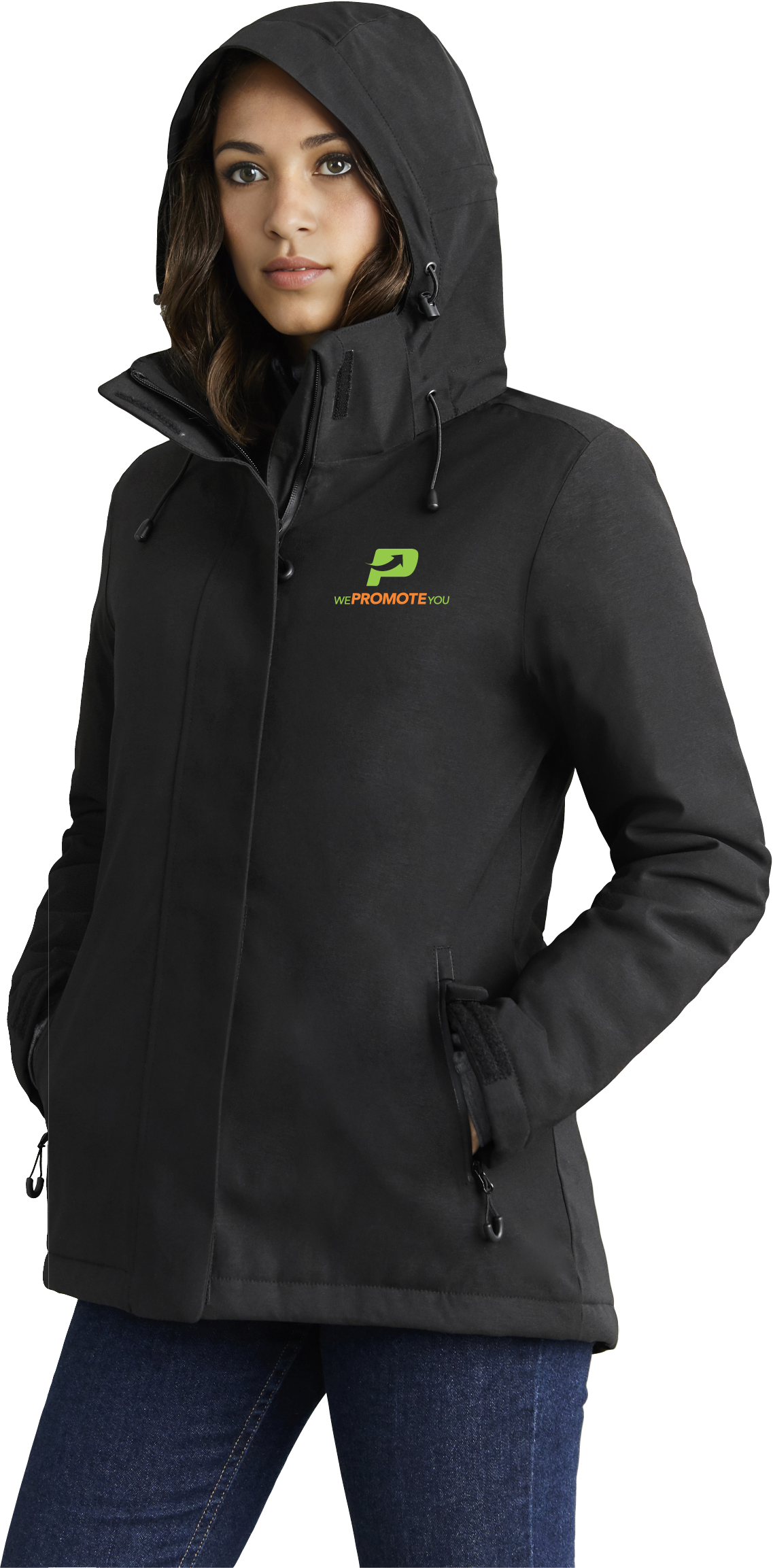
What Does Your Uniform Need to Communicate for Your Industry?
Different industries require different brand communications from their uniforms. Here is a guide to what the uniform needs to say in major Australian business sectors:
Professional Services (Accounting, Legal, Financial Planning, IT, Consulting)
The uniform needs to communicate: authority, trustworthiness, competence, and reliability. For these industries, corporate branded wear — quality business shirts, polo shirts, or blazers with clean, precise embroidery — is the right vehicle. The message is: we are serious professionals who take our work and our presentation seriously. You can trust us with your important decisions.
Trades and Construction
The uniform needs to communicate: safety compliance, professional competence, and organisational credibility. For these industries, quality branded hi-vis workwear and trade shirts are the right vehicle. The message is: we operate to safety standards, we are identifiable and accountable, and we are an established business rather than a one-person operation. This is a team you can trust on your site.
Healthcare and Allied Health
The uniform needs to communicate: clinical competence, cleanliness, and reassuring professionalism. For these industries, branded healthcare uniforms — scrubs, consultation jackets, clinical tunics — in clinical-appropriate colours are the right vehicle. The message is: we know what we are doing, we maintain clinical standards, and your care is in professional hands.
Hospitality and Food Service
The uniform needs to communicate: service quality, cleanliness, and cohesive professionalism. For these industries, well-fitted, branded hospitality wear appropriate to the establishment’s positioning is the right vehicle. In a fine dining context, the message is sophistication and attention to detail. In a casual dining context, the message is friendly professionalism. The garment style and quality should match the establishment’s brand promise.
Logistics, Fleet, and Mobile Services
The uniform needs to communicate: identification, reliability, and professional competence. For these industries, branded polo shirts and workwear with clear logo visibility are the right vehicle. The message is: you can verify who this person is, trust them to be in your space, and expect competent, professional service. In industries where staff enter homes, secure facilities, or customer premises, this clarity of identification is both a commercial and a safety requirement.
The Quality Question: Why the Garment Matters as Much as the Brand
There is an uncomfortable but important truth about branded uniforms that many business owners discover too late: a poorly chosen or cheap garment does not just fail to deliver the brand benefits described above — it actively contradicts them. The brand message communicated by a faded, shrinking, pilling fabric is entirely inconsistent with a message of quality, professionalism, and investment.
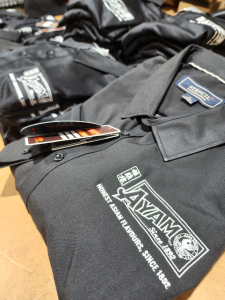
This is why garment selection is as important as decoration selection when building a branded workwear program. The garment needs to fit correctly across a range of body types, hold its colour through repeated industrial washing, feel comfortable to wear for a full working day, be appropriate for the working environment, and carry the brand decoration durably — through quality embroidery that does not fray or fade, or screen printing that does not crack or peel.
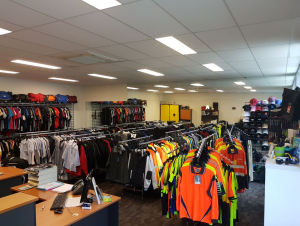
At We Promote You, garment selection is a specialist service. Our Sydney showrooms carry over 5,000 sample garments from quality suppliers including Bisley, Winning Spirit, Biz Collection, JB’s Wear, Portwest, and others. When you visit us, you can touch, try on, and compare garments across every category — not just look at product images on a screen.
Taking Control of the Silent Conversation: Where to Start
If this article has made you think differently about what your staff uniform is currently saying about your business, here is a practical starting point for taking control of that silent conversation:
Audit what your team currently wears: Be honest. Is the presentation consistent? Is the quality maintained? Is the branding accurate and visible? Does the overall impression match the brand identity you want to project?
Define what you want the uniform to say: Write down the three or four key qualities you want clients to associate with your business from the first visual impression. Use these as a brief when selecting garments and decoration.
Choose quality garments that match the brief: Visit our showrooms and work with our team to select garments that communicate the right brand message for your industry and target market.
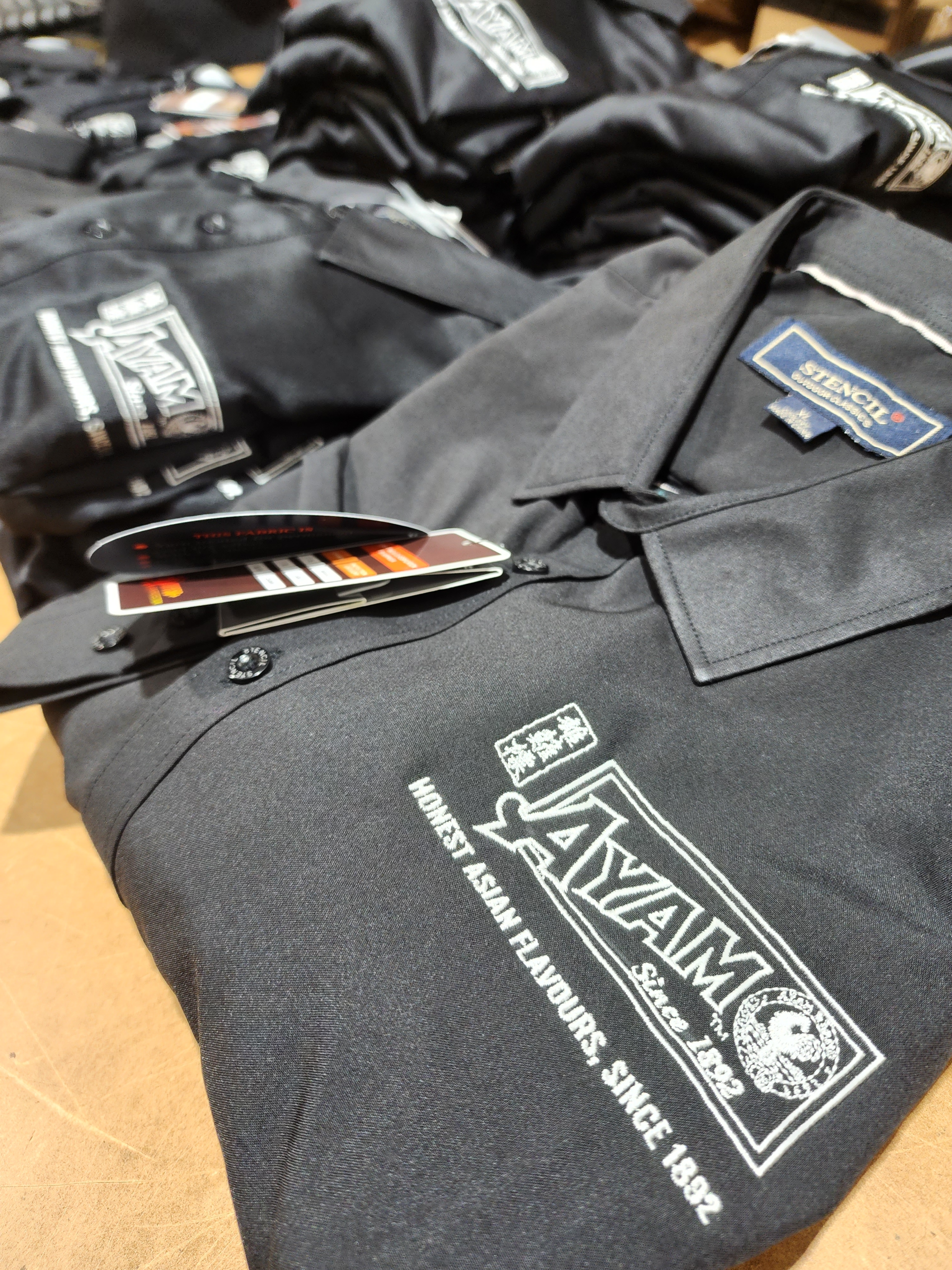
Brand them properly: Use commercial-grade embroidery or printing, Pantone-matched colours, and correct logo placement. Do not compromise on the quality of the decoration — it is the final detail that makes the difference between a professional result and an amateurish one.
Apply the standard consistently: Every team member who interacts with clients, customers, or the public should be in the same quality branded workwear. No exceptions. No hierarchy. The silent conversation needs to be consistent to be effective.
Maintain and refresh regularly: Replace garments when they show wear. Refresh the program when the brand identity updates. Keep the visual communication current and sharp.
Start the Conversation With We Promote You
Your uniform is already talking about your business. The question is whether it is saying what you want it to say. At We Promote You, we help Australian businesses take control of that silent conversation — through quality branded workwear that communicates the right message about who you are, what you do, and why clients should choose you.
Visit Our Sydney Showrooms: See, touch, and compare over 5,000 sample garments in person. Castle Hill: Unit 25, 5 Gladstone Road, Castle Hill NSW 2154. Blacktown: Unit 1A, 202 Sunnyholt Road, Blacktown NSW 2148.
Contact us online or call 1300 885 737 to begin the conversation.
We Promote You — Branded Uniforms, Custom Embroidery & Promotional Products | Sydney | Since 2003
www.wepromoteyou.com.au | 1300 885 737 | Castle Hill & Blacktown Showrooms