Published by We Promote You | Sydney’s branded uniform and promotional products specialists since 2003
We Judge Before We Know We Are Judging
There is a deeply inconvenient truth at the heart of every business interaction: your customers and clients make judgements about your business before you have had the chance to prove yourself. Not after the proposal. Not after the meeting. Not after the job is done. Within seconds of seeing one of your people — in person, at your premises, or on a worksite — a series of rapid, largely unconscious judgements are made about your competence, your trustworthiness, and the value you are likely to provide.
This is not a character flaw in your customers. It is how the human brain is wired. We evolved to make fast assessments based on visual information, and that instinct does not switch off when someone walks into a business context. The question for every Australian business owner and manager is not whether these snap judgements happen — they do, every single time — but whether you are actively managing them, or leaving them to chance.
The single most controllable variable in that first impression equation, for most businesses, is the appearance of your people. And the most effective, cost-efficient, and consistent tool for managing your team’s appearance is quality branded workwear and custom uniforms. At We Promote You, we have spent over two decades helping Australian businesses take control of this first impression — and in this article, we want to explain exactly why the psychology backs it up.
Research insight: Studies in consumer behaviour consistently show that customers rate professional appearance as one of the top three factors influencing their decision to trust a service provider — ranking alongside personal recommendation and online reviews.
The Science of First Impressions: What Actually Happens in Those First Seven Seconds
The seven-second rule for first impressions is not just a motivational poster — it is backed by decades of psychological research. In 2006, Princeton University researchers Janine Willis and Alexander Todorov published landmark findings showing that people form reliable first impressions of trustworthiness, competence, and likeability within a fraction of a second of seeing a face. Further research has extended this to the full visual package — including clothing, grooming, and overall presentation.
What this means practically is that your customer has already formed an initial opinion of your staff member before that person has introduced themselves, explained the service, or done a single thing to demonstrate competence. The opinion formed in those opening seconds creates a cognitive anchor — a baseline bias — that all subsequent information is then filtered through. If the first impression is positive, your team member will need to do something quite remarkable to dislodge it. If the first impression is negative, they will need to work very hard to overcome it.
For businesses, this creates an enormous opportunity. You cannot control the weather on the day of a client visit. You cannot always control whether your best person is having their best day. But you absolutely can control what your team wears. And when what they wear is a quality, well-branded professional uniform, you are loading that cognitive anchor in your favour before your people have said a word.
The Components of Visual Trust
When a customer or client encounters a uniformed staff member, their brain is processing several visual signals simultaneously. Understanding what each of these signals communicates helps explain why branded workwear is so powerful:
Consistency: A uniform signals that this person belongs to a group that operates under shared standards. If one person in the team is wearing the uniform correctly and professionally, the brain extrapolates that the whole team operates to similar standards.
Authority: Uniforms confer a degree of legitimate authority. Research in social psychology has long established that people are more likely to follow instructions from, trust information given by, and feel comfortable with individuals who are in recognisable professional attire.
Effort: A well-fitted, clean, crisply presented uniform signals that the business cares about its presentation. And if it cares about its presentation, the customer reasons, it probably cares about the quality of its work too.
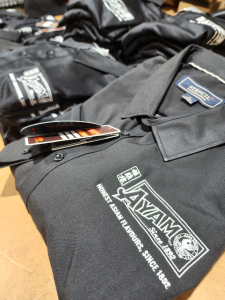
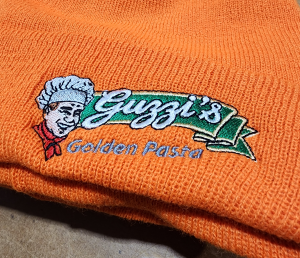
Identity: Branded workwear with your company name and logo tells the customer exactly who they are dealing with. It eliminates ambiguity and uncertainty — both of which trigger caution rather than trust in a business interaction.
The Halo Effect: Why Appearance Shapes Everything Else
One of the most powerful and well-documented phenomena in social psychology is the halo effect — the tendency for a positive impression in one area to create a positive bias across all other areas. First described by psychologist Edward Thorndike in 1920 and replicated in hundreds of studies since, the halo effect explains why people who are perceived as attractive are also judged to be smarter, kinder, and more competent than those perceived as less attractive — even when no actual evidence exists for any of these additional qualities.
In a business context, professional appearance creates a halo effect that influences how customers perceive every other aspect of your service. A staff member in a smart, branded corporate uniform is perceived — before saying or doing anything — to be more knowledgeable, more reliable, more skilled, and more likely to deliver on their promises than an identically capable staff member in casual clothing.
This is not about tricking customers. It is about ensuring that the perception of your business aligns with the reality of your capability. Most Australian businesses that invest in quality custom embroidered workwear do so because they ARE professional, competent, and reliable — they just want to make sure their appearance confirms what is actually true rather than creating doubt.
The halo effect in action: Two equally qualified service businesses quote on the same job. One team arrives in branded, well-presented uniforms. The other in casual personal clothing. Research consistently shows the uniformed team will be perceived as more professional, more trustworthy, and better value — even before they have spoken. That perception advantage translates directly into winning more business.
Do Uniforms Improve Staff Morale? The Answer Is Yes — And Here Is Why
The psychology of uniforms does not just affect how customers perceive your staff — it fundamentally affects how your staff perceive themselves and perform at work. This is one of the most underappreciated benefits of investing in quality branded workwear for Australian businesses.
Research in organisational psychology has consistently found that when employees wear a uniform, several measurable changes occur in their behaviour and mindset:
The Role Transition Effect
Putting on a uniform is a psychological ritual of role transition. The act of changing into work clothing signals to the brain that it is time to shift from personal identity to professional identity. This role transition is associated with higher levels of focus, professionalism, and task engagement. Many employees report feeling ‘more like themselves at work’ when wearing a uniform — because the uniform represents their professional self, which they are proud of.
The Enclothed Cognition Effect
Psychologists Hajo Adam and Adam Galinsky coined the term ‘enclothed cognition’ to describe the systematic influence that clothing has on the wearer’s psychological processes. Their research demonstrated that the clothes we wear affect not just how others see us but how we think, feel, and perform. In one landmark study, participants who wore a doctor’s coat performed significantly better on attention tasks than those wearing the same coat described as a painter’s smock — because the coat activated the mental schemas associated with the role it represented.
Applied to branded business uniforms, this research has a clear implication: staff members who wear your company’s branded workwear are not just representing your brand to the outside world — they are also activating a professional, competent, on-brand mindset within themselves. They are, quite literally, becoming their professional role when they put on the uniform.
Equity and Team Identity
When every member of a team wears the same quality branded workwear — from senior staff to junior team members — a visible message of equality and shared identity is sent throughout the organisation. There is no hierarchy signalled by who has the better outfit. Everyone is, visually, part of the same team. This sense of belonging and shared identity is a well-established driver of employee engagement, job satisfaction, and retention.
Conversely, businesses where some staff have branded uniforms and others do not, or where different quality garments are provided to different levels of the organisation, often find that the uniform policy creates division rather than unity. The solution is straightforward: invest in quality branded workwear for everyone, at the same standard, and the equity message reinforces the culture you want to build.
Why Customers Trust Uniformed Staff: The Security and Safety Dimension
Beyond the softer psychological factors of trust and professionalism, there is a harder, more practical reason why customers respond positively to uniformed staff: safety and security.
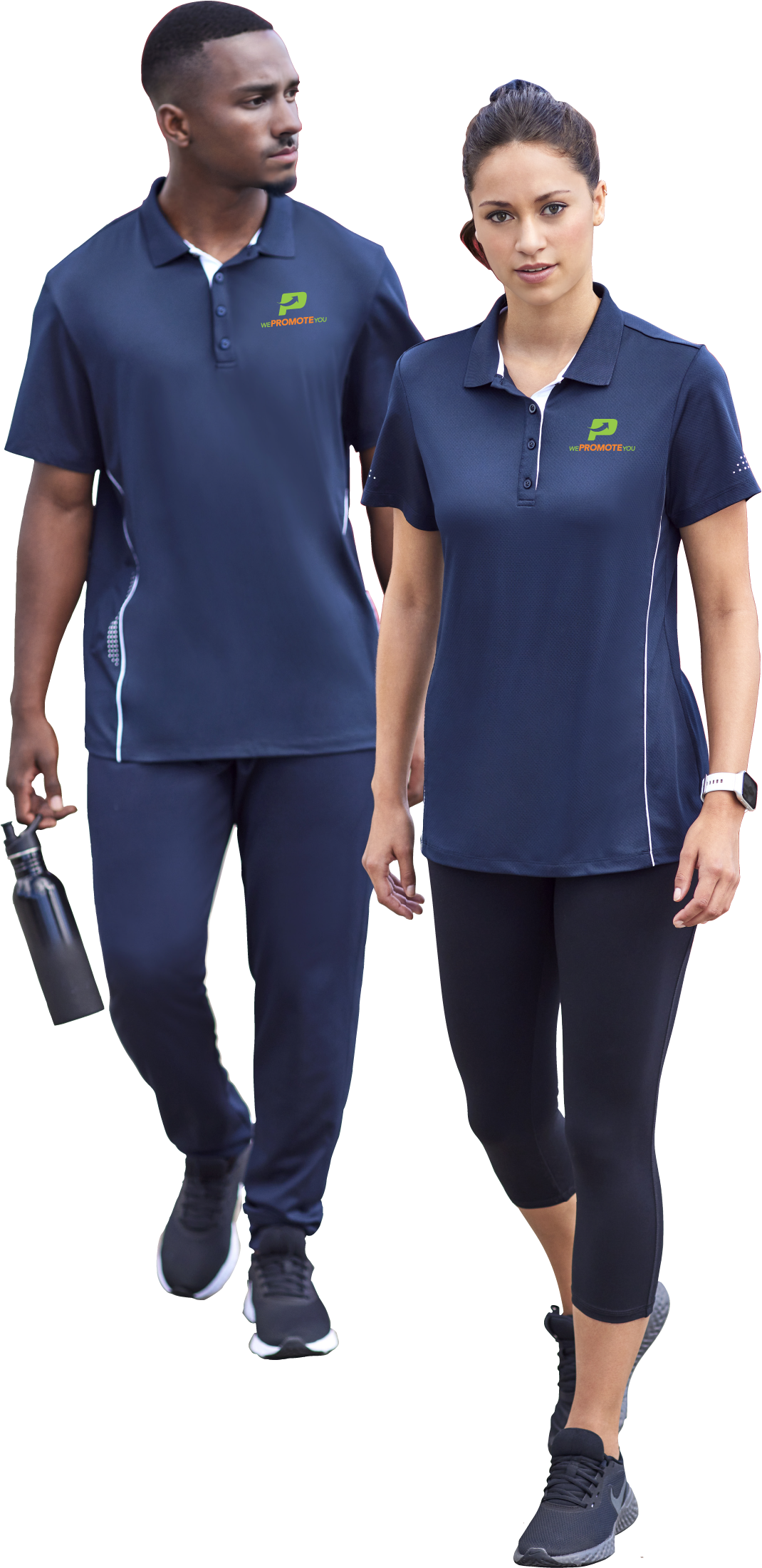
In Australia, where service businesses regularly send staff to customer homes, offices, medical facilities, and building sites, the ability for customers to immediately identify who is supposed to be there — and who is not — is a genuine security concern. A staff member in branded workwear bearing your company’s logo is immediately identifiable as a legitimate representative of your business. A staff member in casual clothing is not.
This matters significantly in industries such as:
In-home services: Plumbers, electricians, cleaners, pest control, and other trades where customers are inviting strangers into their homes. Branded uniforms with ID are now expected by many homeowners as a basic safety protocol.
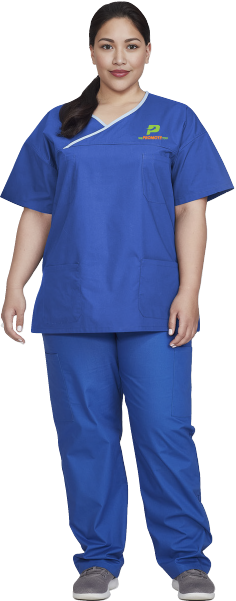
Healthcare: Patients and residents of medical and aged care facilities need to be able to instantly identify clinical staff from support staff from visitors. Branded healthcare uniforms are not optional — they are a clinical governance requirement.
Facility management and security: Any business where staff operate within other businesses’ premises needs its people to be clearly identifiable. Branded workwear eliminates the uncertainty that could otherwise create security incidents.
Retail and hospitality: Customers who cannot identify a staff member cannot ask for help — a basic failure of the customer experience that branded uniforms completely eliminate.
The visibility that branded uniforms provide is not just a nice-to-have — for many businesses, it is a core operational requirement that directly affects both customer safety and satisfaction.
The Consistency Principle: Why Your Brand Cannot Afford Variable Presentation
One of the most insidious ways that trust is lost in business interactions is through inconsistency of experience. Customers and clients build mental models of your business based on every interaction they have with it. When those interactions are consistently positive — including visually consistent, professional presentation — the mental model is strong, positive, and resilient. When experiences are inconsistent, the mental model is unstable, and trust is the first casualty.
Consider how this plays out visually. A client who encounters one of your team members at a professional networking event, looking sharp in a branded corporate shirt, forms a positive impression. The next week, the same client visits your premises and encounters two different team members — one in the branded uniform and one in casual personal clothing. That inconsistency immediately triggers uncertainty: Is this a professional business or not? Do they have standards, or not?
This is why we consistently advise businesses to commit fully to a branded workwear program across the entire team rather than applying it selectively. Partial implementation often creates more confusion than no implementation at all, because it implies inconsistent standards rather than absent ones.
The consistency rule: If a branded uniform policy is worth having, it is worth applying consistently. Every team member — regardless of seniority or role — who interacts with clients, customers, or the public should be in the same quality branded workwear. No exceptions. No hierarchy. No mixed messages.
What Your Uniform Is Communicating — Whether You Know It or Not
Your staff are going to communicate a message about your business through their appearance whether you have given them tools to do so or not. The question is whether that message is the one you want sent. Here is what different scenarios actually communicate:
Scenario A: Well-fitted, branded, well-maintained uniform
Message received: This business has invested in professionalism. It has clear standards. It cares about how it presents itself, which probably means it cares about the quality of its work. I feel I can trust this business.
Scenario B: No uniform, smart business casual
Message received: This might be a professional business. I am not certain. I will need to look for other signals of competence and reliability before I feel comfortable. I am cautious.
Scenario C: No uniform, mixed casual clothing
Message received: This business does not seem to have presentation standards. If it does not care about how it looks, does it care about the quality of its work? I am uncertain about what I am dealing with.
Scenario D: Cheap, poorly fitted, faded branded clothing
Message received: This business tried to look professional but either could not afford quality or did not care enough to invest in it properly. This may say something about how it values its clients.
The only scenario that consistently and reliably builds trust is Scenario A. And the path to Scenario A is straightforward: invest in quality branded workwear, delivered by a specialist supplier with the expertise to get both the garment selection and the decoration right.
Building a Brand Your Customers Instinctively Trust: The Full Picture
The psychology of the uniform is one part of a larger picture of brand trust. To build a business that customers instinctively trust — the kind of trust that drives referrals, long-term relationships, and premium pricing tolerance — every brand touchpoint needs to be consistent and professional. Branded uniforms are an essential and highly visible part of that picture, but they work best when they are part of a coherent overall brand presentation that includes:
Quality branded promotional materials: Business cards, brochures, promotional products, and branded merchandise that carry the same visual identity as your workwear.
Branded vehicles: If your fleet carries your colours and logo, the visual brand identity should match the uniform your team is wearing.
Digital brand consistency: Your website, social media, and email presentations should carry the same colours, fonts, and visual tone as your physical brand.
Showroom or premises presentation: The physical environment where customers interact with your business should reflect the same professional standard as your team’s appearance.
When all of these elements align — and when your team is wearing quality, professionally decorated branded workwear — you create a brand experience that is greater than the sum of its parts. Customers feel the coherence of a well-run organisation at every touchpoint, and that coherence is one of the most powerful trust signals available.
How to Get Your Uniform Strategy Right From the Start
For businesses that are setting up or upgrading a branded workwear program, the approach matters as much as the outcome. Here is what a successful uniform strategy looks like for a medium to large Australian business:
Start with your brand identity: Your uniform colours, logo placement, and garment style should align with your existing brand guidelines. If your brand is conservative and corporate, your uniform should reflect that. If your brand is energetic and contemporary, your garments can reflect that too.
Involve your team: Staff who have input into their uniform design and fit are more likely to wear it correctly and with pride. Conduct a sizing session, gather feedback on comfort and practicality, and take fit and function seriously alongside appearance.
Choose quality over cost: A cheaper garment that falls apart or fades in three months is not a saving — it is a false economy. Quality garments with commercial embroidery will last years and maintain their professional appearance throughout.
Plan for growth and replacement: For businesses with growing headcounts or regular staff turnover, establish a relationship with a supplier who can reliably manage ongoing orders. We Promote You works with many clients on an ongoing account basis, ensuring new staff always have access to the same garments and decoration.
Enforce the standard consistently: A uniform policy only delivers trust and brand recognition value if it is consistently applied. Establish clear guidelines on when uniforms are to be worn, how they should be maintained, and what the standard expectations are.
See the Difference in Person — Visit Our Sydney Showrooms
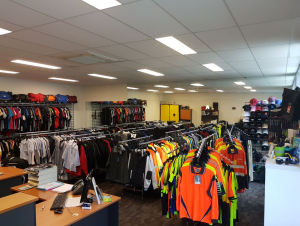
The best way to understand the quality difference that separates a truly professional branded uniform from an ordinary workwear purchase is to see it in person. We Promote You operates two large showrooms in Sydney — Castle Hill and Blacktown — where you can touch and try over 5,000 sample garments across every category, see embroidery quality up close, and speak with our team about the right solution for your business.
There is no better way to make a confident, informed decision about your branded workwear investment than experiencing the quality first-hand. Our team has worked with businesses across every industry in Australia — from national corporates to growing regional businesses — and we understand the specific requirements of each.
Visit Us: Castle Hill Showroom — Unit 25, 5 Gladstone Road, Castle Hill NSW 2154. Blacktown Showroom — Unit 1A, 202 Sunnyholt Road, Blacktown NSW 2148. Open during business hours. No appointment necessary, but call ahead if you have a specific brief and we will prepare relevant samples for your visit.
Prefer to start the conversation remotely? Contact us online or call 1300 885 737. Tell us about your business, your team size, your industry, and your brand colours — and we will take it from there.
Because your customers are already forming opinions about your business based on what your people look like. The question is whether you are in control of what they conclude.
At We Promote You, we help you make sure the answer is always: professional. Consistent. Trusted.
We Promote You — Branded Uniforms, Custom Embroidery & Promotional Products | Sydney | Since 2003
www.wepromoteyou.com.au | 1300 885 737 | Castle Hill & Blacktown Showrooms